Overview
Cosmetic-research peptides are studied for skin, collagen, and pigmentation-related signaling, often in in-vitro or topical-model contexts. This guide describes the researched mechanism and handling as research characterization, not a cosmetic-outcome claim.
A pre-formulated skin-focused research blend combining GHK-Cu, BPC-157, and TB-500.
Evidence at a glance: No efficacy evidence cited
No published efficacy evidence is cited for this compound. We state that plainly rather than pad the page.
Molecular identity
- Molecular formula
- Multi-component blend
- Molecular weight
- Mixed
- CAS number
- Blend (see components)
- Appearance
- Blue-tinted lyophilized powder (blend)
- Purity (HPLC)
- 98.6%
Researched mechanism
Combines the mechanisms of its three components; no combined-formulation clinical data exists.
Described as a mechanism characterized in the literature, not an effect you should expect from use.
Evidence
Honest note on evidence: This is a blend. No published research exists on the combination as a single formulation; see each component's page for individual evidence.
How it compares
| Versus | Attribute | Note |
|---|---|---|
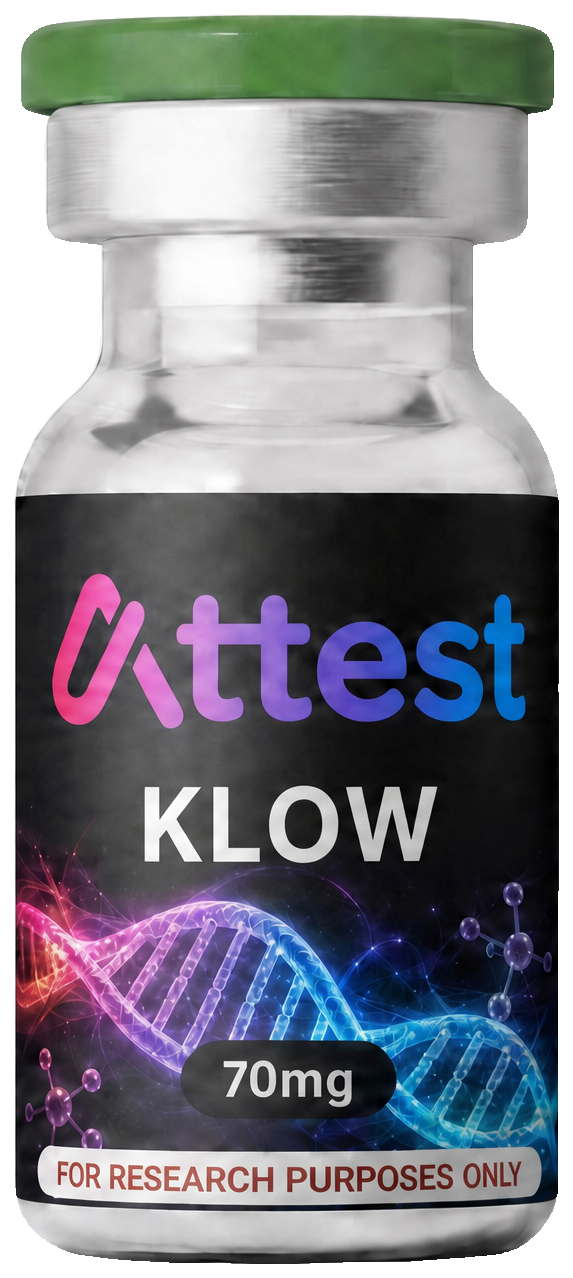
| KLOW | Composition | KLOW adds KPV to a similar base blend. |
Reconstitution
Concentration math only: adding bacteriostatic water to the vial gives the resulting mg/mL shown below. This is not usage guidance.
| Vial | Bacteriostatic water | Concentration |
|---|---|---|
| 70 mg | 3 mL | ~23 mg/mL total peptide |
Storage & stability
| State | Temperature | Duration |
|---|---|---|
| Lyophilized (unopened) | -20°C | 24 months |
| Reconstituted | 2–8°C | up to 3 weeks |
Common questions
GLOW vs KLOW?+
GLOW is a 3-part skin-focused blend; KLOW adds KPV. See the comparison note.