Overview
Longevity and cellular-research compounds are studied for pathways such as mitochondrial signaling, telomere biology, and redox balance, mostly in preclinical work. Some rest on a limited, single-group literature. Where that is the case, this guide says so rather than overstating it.
The endogenous tripeptide antioxidant (Glu-Cys-Gly), central to cellular redox research.
Evidence at a glance: Mechanistic / in-vitro only
The published record here is mechanistic or in-vitro only. No human-efficacy conclusion can be drawn from it.
Molecular identity
- Molecular formula
- C10H17N3O6S
- Molecular weight
- 307.32 g/mol
- CAS number
- 70-18-8
- Amino acids
- 3
- Appearance
- White powder
- Purity (HPLC)
- 99.2%
Researched mechanism
Primary intracellular antioxidant and redox buffer; studied for detoxification and oxidative-stress pathways.
Described as a mechanism characterized in the literature, not an effect you should expect from use.
What the published research shows
Central antioxidant role characterized across extensive literature.
Every citation states its study type and population, so preclinical data is never presented as human-efficacy evidence.
How it compares
| Versus | Attribute | Note |
|---|---|---|
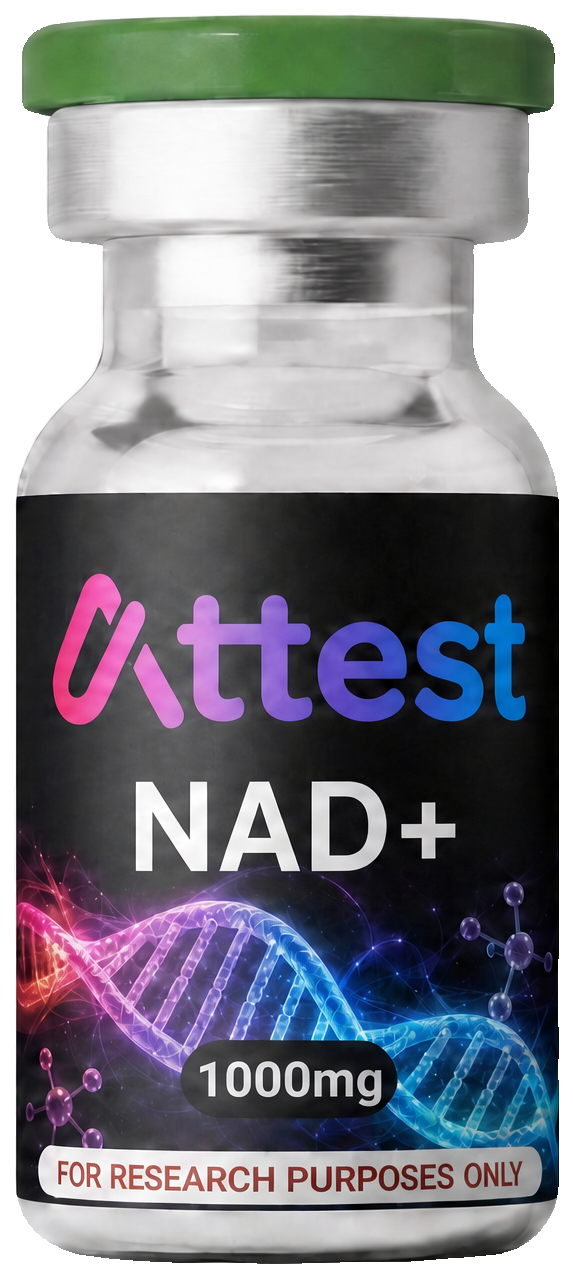
| NAD+ | Role | Both are core cellular cofactors studied in longevity contexts. |
Reconstitution
Concentration math only: adding bacteriostatic water to the vial gives the resulting mg/mL shown below. This is not usage guidance.
| Vial | Bacteriostatic water | Concentration |
|---|---|---|
| 1500 mg | 8 mL | 187.5 mg/mL |
Storage & stability
| State | Temperature | Duration |
|---|---|---|
| Lyophilized (unopened) | -20°C | 24 months |
| Reconstituted | 2–8°C | up to 1 week |
Common questions
Is it stable in solution?+
Glutathione oxidizes readily; use promptly after reconstitution and keep refrigerated.