Overview
The cognitive and neuro-research peptides here are studied for neurotrophic and neuromodulatory signaling, largely in preclinical and early clinical literature. Evidence depth varies widely across the group, so this guide states the strength of the published record for each compound plainly rather than implying a uniform effect.
A short peptide bioregulator studied in the Khavinson tradition for neuronal and cellular-maintenance research.
Evidence at a glance: Preclinical (animal) evidence
The cited evidence here is preclinical animal-model work, with limited or no human-trial data. Read the research profile accordingly.
Molecular identity
- Molecular formula
- C15H26N6O8
- Molecular weight
- 418.4 g/mol
- CAS number
- Not standardized
- Amino acids
- 3
- Appearance
- White lyophilized powder
- Purity (HPLC)
- 98.7%
Researched mechanism
Proposed to interact with DNA regulatory regions in neuronal cells; mechanism is not firmly established.
Described as a mechanism characterized in the literature, not an effect you should expect from use.
What the published research shows
Neuroprotective effects reported in preclinical work from originating labs.
Honest note on evidence: Evidence comes largely from the originating research group and is preclinical; independent replication is limited.
Every citation states its study type and population, so preclinical data is never presented as human-efficacy evidence.
How it compares
| Versus | Attribute | Note |
|---|---|---|
| Epitalon | Class | Both are Khavinson-class short peptide bioregulators. |
Reconstitution
Concentration math only: adding bacteriostatic water to the vial gives the resulting mg/mL shown below. This is not usage guidance.
| Vial | Bacteriostatic water | Concentration |
|---|---|---|
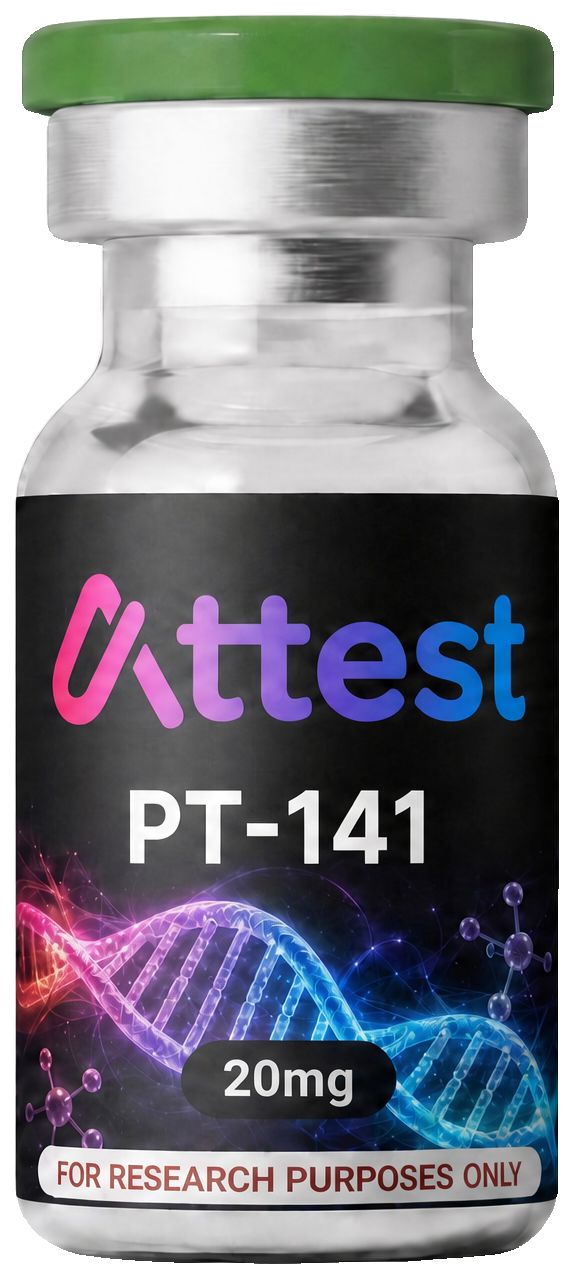
| 20 mg | 2 mL | 10 mg/mL |
Storage & stability
| State | Temperature | Duration |
|---|---|---|
| Lyophilized (unopened) | -20°C | 24 months |
| Reconstituted | 2–8°C | up to 3 weeks |
Common questions
What is a 'peptide bioregulator'?+
A short-peptide research class associated with the Khavinson group; see the cited literature and its limitations.